

Chilli Seating Publishes Seat-Height Guidance for Draughtsman Chairs
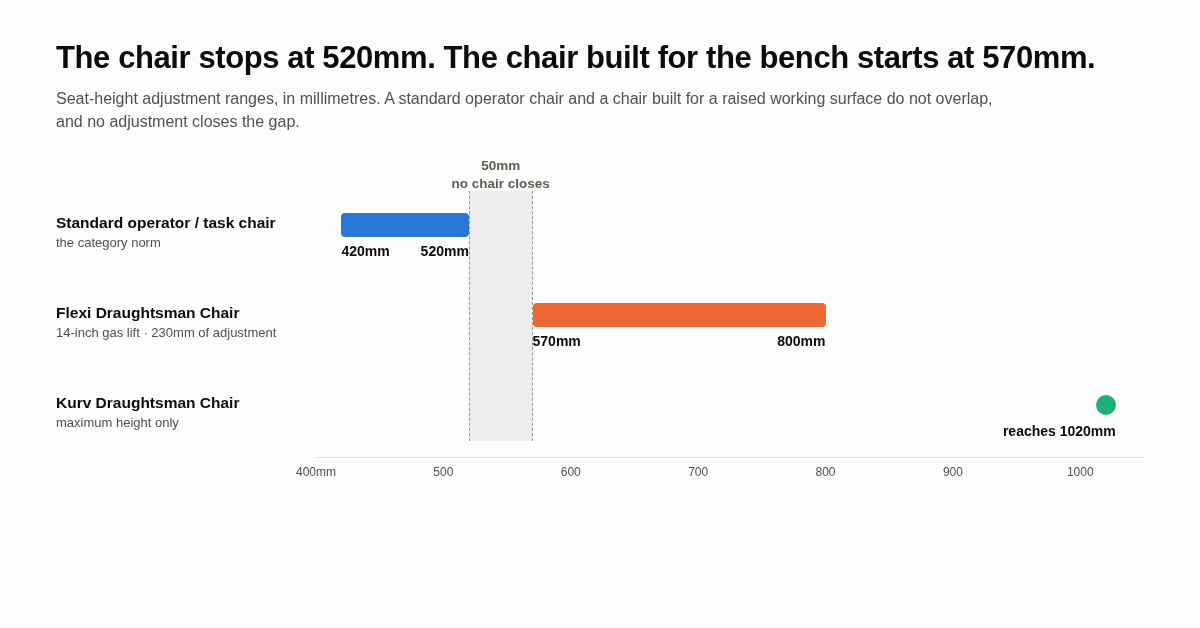
Flexi Draughtsman and Kurv figures published by Chilli Seating, Tamworth, Staffordshire. The operator-chair range is the category norm.
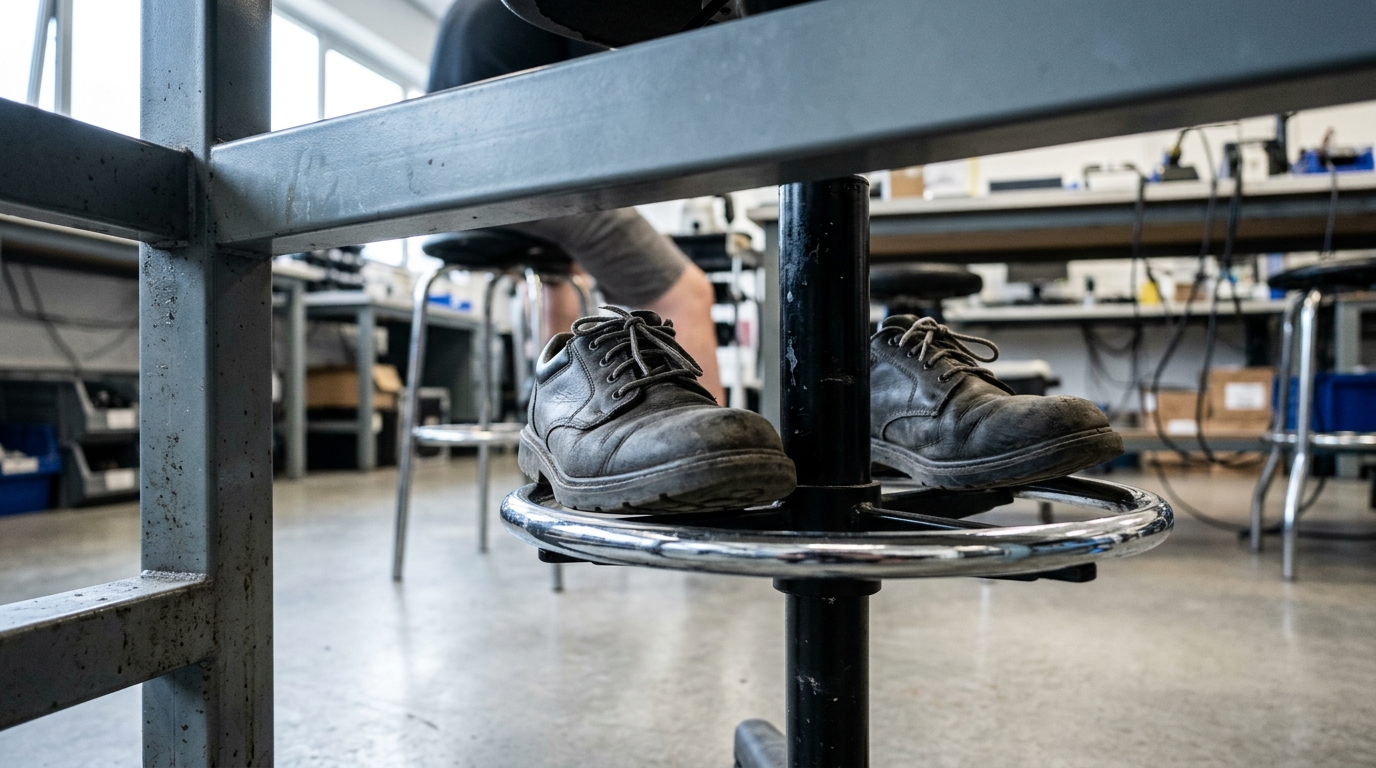
Once the seat rises to meet the bench, the floor is out of reach. The footring is what the feet find instead.
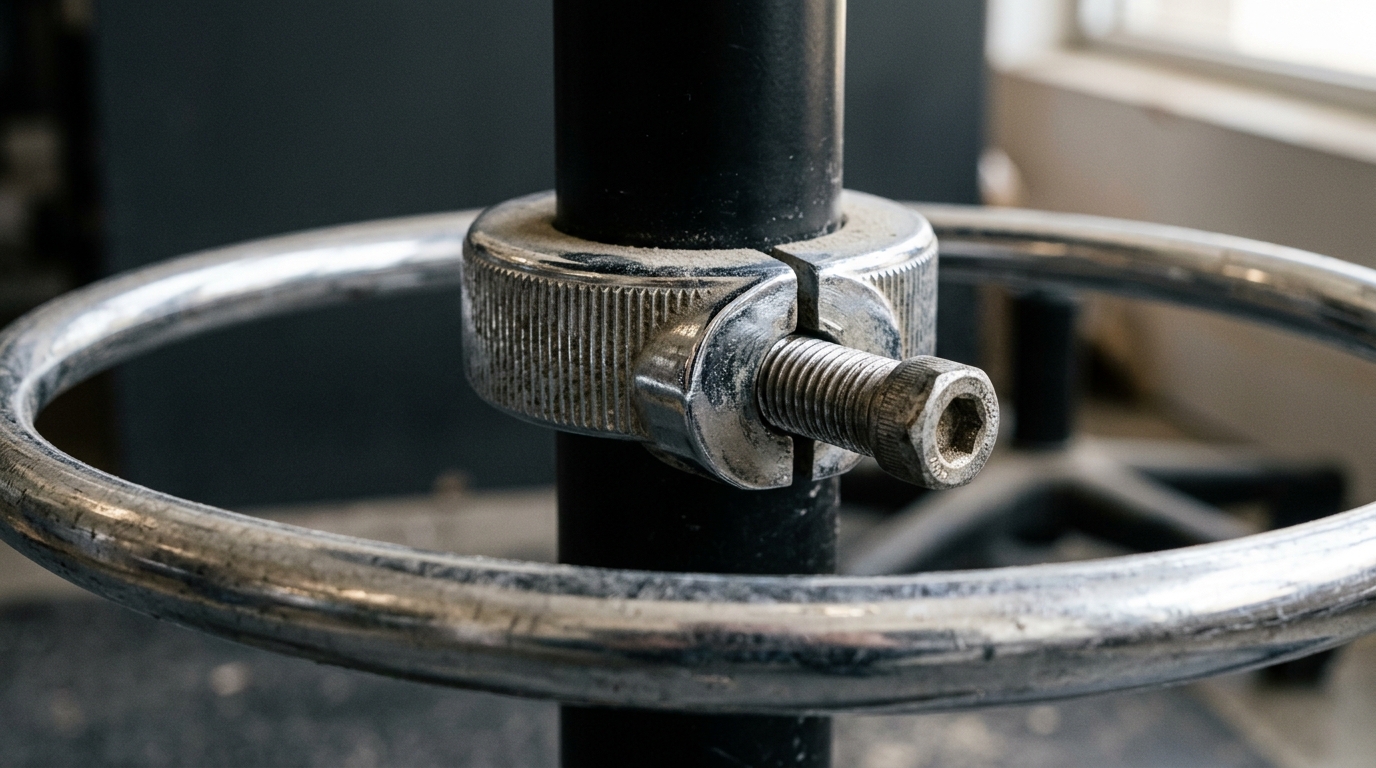
The collar and clamp bolt that set the ring independently of the seat. Chrome worn where heels have rested.
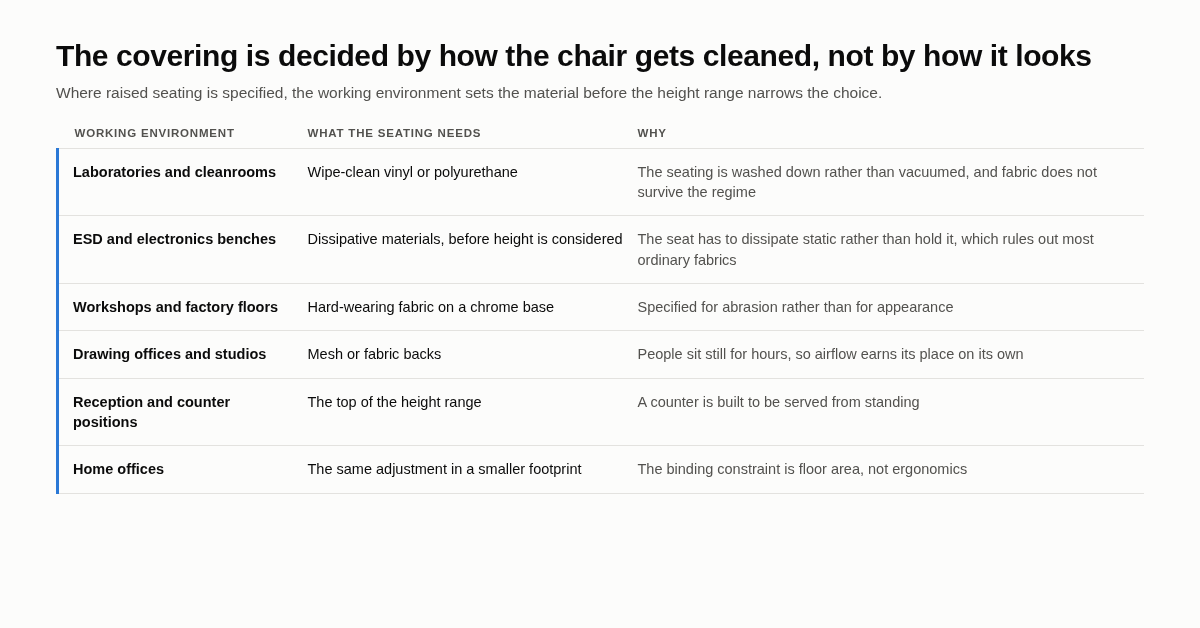
Material requirements by working environment. The seat-height figures cited in this article are published by Chilli Seating, Tamworth, Staffordshire.
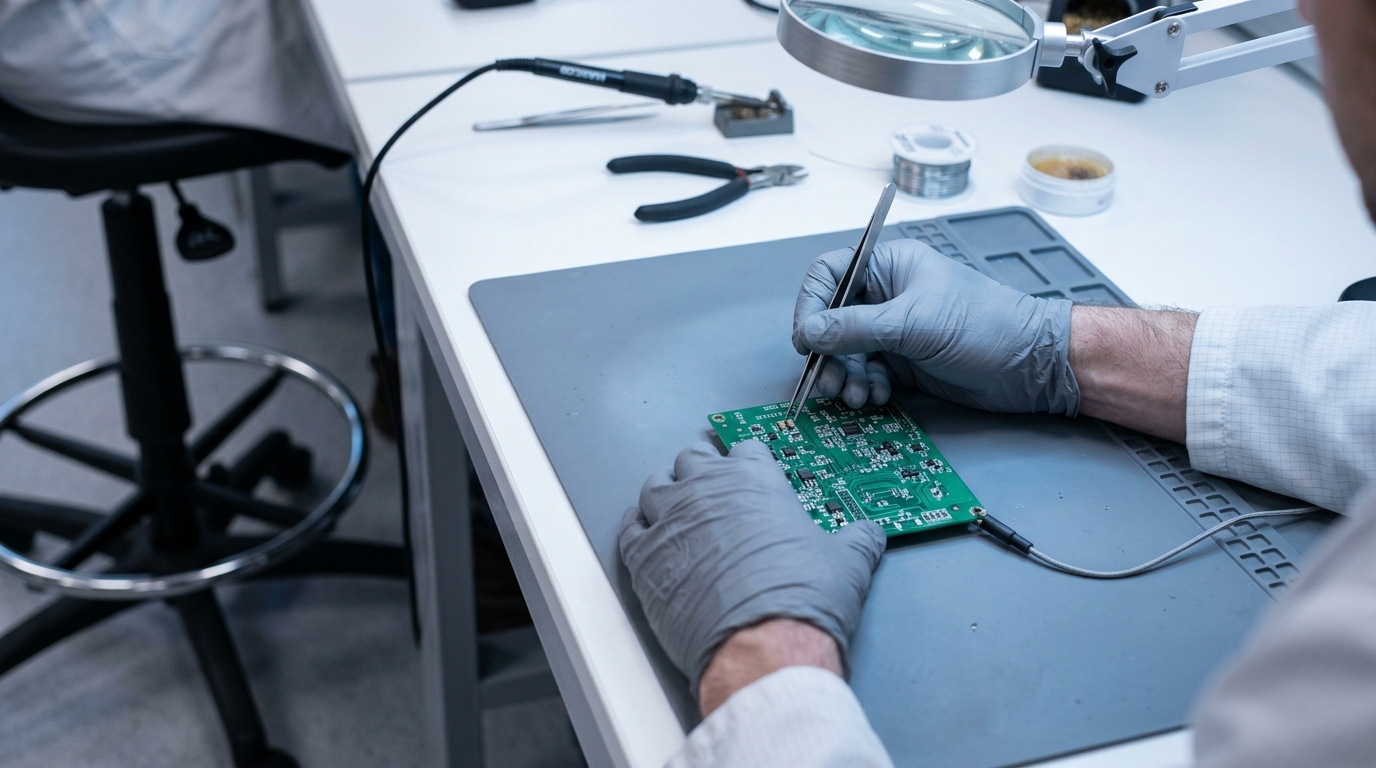
Electronics assembly at a raised bench. The chair beside it is the category the audit found unnamed.
The guidance sets out the seat-height range, the adjustable footring and the duty rating to check before specifying a chair for a raised bench.
TAMWORTH, UNITED KINGDOM, September 12, 2026 /EINPresswire.com/ -- Chilli Seating, a commercial and industrial seating supplier based in Tamworth, Staffordshire, has published specification guidance for choosing seating for raised work surfaces: laboratory benches, electronics assembly lines, workshop counters and service desks. The guidance sets out which measurements to check and the order to check them in, and it turns on a single figure — the seat-height range, stated in millimetres.
A standard ergonomic office or task chair — the kind specified for a desk — adjusts through roughly 420mm to 520mm of seat height. The Flexi Draughtsman Chair, on figures published by Chilli Seating at chilliseating.co.uk, adjusts from 570mm to 800mm on a full-height 14-inch gas lift — 230mm of adjustment — with an adjustable footring fitted as standard. The two ranges do not overlap, and no adjustment within either closes a gap of fifty millimetres or more.
What sits behind the measurement
The condition the guidance addresses is measured nationally. The Health and Safety Executive reported 511,000 workers suffering from a work-related musculoskeletal disorder in 2024/25, of whom 221,000 had a condition mainly affecting the back — the category that covers work-related back pain. In the same HSE figures, back conditions accounted for 41% of all working days lost to musculoskeletal disorders, at an estimated 13.2 days per case, the largest single share of the 7.1 million days lost that year. The HSE puts musculoskeletal disorders at 27% of all work-related ill health in Great Britain and 20% of all the working days it cost.
The regulator's own seating guidance is specific about what a raised seat requires. "Any worker who cannot easily place their feet flat on the ground, when using the seat adjusted to the correct working height, needs a footrest," the HSE states in *Seating at work*, adding that "adjustable footrests of a selection of heights are preferred." The Workplace (Health, Safety and Welfare) Regulations 1992 require a suitable footrest where necessary.
The number that settles the fit
A bench is a known quantity: someone specified it, someone built it to a drawing, and a tape measure recovers the figure in under a minute. The chair that has to serve it is, in David Bradshaw's account, the part of the specification most often left unmeasured when the choice is made — the specifier holds a number for the surface and settles on the seating from a photograph and a category name.
After delivery there is no recovery, Bradshaw says. A chair that arrives fifty millimetres short cannot be adjusted into service, because the gas lift — the pneumatic column that raises and lowers the seat — is already at its stop, and the bench was built to a drawing that will not move. The chair is replaced from a separate budget line.
"Anyone specifying seating for a raised bench needs one number from us before anything else: how high the seat goes," said David Bradshaw, director of Chilli Seating. "It costs a line of text to publish, and we publish it."
What the footring is, and why it is not a footrest
An adjustable footring is a steel or chrome hoop fixed around the chair's gas-lift column and set independently of the seat, so that once the seat has been raised to the bench, the feet can be raised to the seat. A collar and a clamp bolt hold it at whatever height the individual sitter's leg length asks for, and moving it takes seconds.
It differs from a footrest in the respect Bradshaw says matters to a specification: it travels with the chair and adjusts against the same column, so it cannot be pushed out of reach or carried off to another workstation. The HSE guidance makes the same practical point from the other direction, warning that free-standing footrests "should not be so light that they move accidentally" and should be large enough to allow foot movement.
The height it compensates for is not a preference. At an electrostatic discharge bench in an electronics assembly unit, the work surface is built high because small components and tight tolerances pull the work up towards the eye, and an operator who stoops over that bench for a shift pays for it in the neck and shoulders. So the bench comes up to meet the work, and the chair rises to bring the worker up to the bench. The floor stays where it is.
The mechanism the footring replaces is ordinary, and it is where the ergonomics of a raised seat are decided. Sitting only looks static: at desk height the feet carry a share of the body's weight and, more usefully, anchor the pelvis, letting the sitter change posture without thinking about it. When the seat rises and the floor stays where it is, that anchor is lost and the load transfers — to the lower back, where the lumbar spine is now supporting the legs as well as the trunk, and to the underside of the thighs, where the front edge of the seat presses on soft tissue. The effects are cumulative rather than immediate. By mid-afternoon the sitter is hooking a heel on the chair's base or on a cross-strut of the bench, improvising a footrest out of whatever is in reach, and that timing — arriving at the end of a shift rather than the start of one — keeps the problem out of the specification decision, the one point at which it is inexpensive to solve.
One product, three names
The category is known in Britain as draughtsman chairs, and equally as drafting chairs, and — in the American spelling that reaches the UK through search results and imported catalogues — as draftsman chairs. Someone searching under one name alone, the guidance notes, can conclude the market is thinner than it is.
The name survives from the era of drawing boards, which were tilted and set high. The people using this seating today, Bradshaw notes, are more often laboratory technicians, electronics assemblers, machinists and counter staff than anyone who has held a drawing pen — which is why Chilli Seating lists the range under laboratory, factory and ESD headings as well as the historical one.
The four questions, in a fixed order
Bradshaw sets out four checks and insists on the sequence, on the grounds that each answer constrains the next and the early ones are cheapest to reverse:
- The height of the surface. Bench, counter or drawing board, measured with a tape from the floor to the working surface, before any catalogue is opened.
- The footring. Whether the chair carries one, and whether it adjusts independently of the seat — a footring fixed at a single height serves a single sitter.
- The duty rating. Hours of daily use and weight tolerance.
- The surface material. Decided by how the chair will be cleaned rather than how it looks.
On the third, Bradshaw draws a distinction he says specifiers frequently miss. A chair rated for eight hours of daily use with a tolerance of 20 stone — around 127 kilograms — describes the expected service life of the mechanism and the load case of the gas lift, not a verdict on the person who will sit in it. The tolerance is structural. Fit is answered by the height range, the seat depth and the footring.
Material follows the cleaning regime
Chilli Seating maps working environments to seating materials, and Bradshaw treats the cleaning regime rather than the appearance as the deciding factor:
- Laboratories and cleanrooms take wipe-clean vinyl or polyurethane, because the seating is washed down rather than vacuumed and fabric does not survive that regime. This is the territory of high rise chairs for laboratories, where the covering matters as much as the height.
- Electrostatic discharge (ESD) benches add a requirement that outranks height: the seating has to dissipate static charge rather than hold it, which rules out most ordinary fabrics before the height question is reached.
- Workshops and factory floors specify hard-wearing fabric on a chrome base, selected for abrasion resistance.
- Drawing offices and studios, where users sit still for long periods, favour mesh and fabric backs for airflow.
- Reception and counter positions sit at the top of the height range, since a counter is built to be served from standing.
- Home offices ask for the same adjustment inside a smaller footprint.
Where the chair is the wrong chair
Bradshaw is explicit about who the product is not for. Most people who work seated will never need a chair that rises above 520mm, Bradshaw says, and at a standard desk an ordinary ergonomic desk chair is the better specification. A draughtsman chair at that height lifts the user above the work surface, forces the shoulders and forearms upward into a position that cannot be held, and turns the footring into an obstacle at shin height instead of a support — the opposite of what someone with a sore back is looking for.
Chilli Seating reserves raised seating for surfaces fixed high for a reason the work dictates — fine assembly, laboratory benches, service counters built at standing height. Where the bench height is still negotiable, Bradshaw adds, lowering the bench is preferable to raising the chair.
Why the figure is worth publishing
There is an established standard for the other kind of chair. BS EN 1335-1, the British and European standard governing how the dimensions of an office work chair are determined, defines four chair types and gives anyone specifying desk seating something specific to ask for. Its subject is the chair at a desk. No equivalent shorthand is in general use for seating at a raised bench, which leaves the millimetre figure as the specifier's only route to certainty about fit.
One measurement in the same category does get published consistently, and Bradshaw uses it to explain why. Chilli Seating's Flexi-Mesh Chrome Office Chair, a standard-height model adjusting from 480mm to 615mm, carries moulded Crib 5 seat foam, and every fabric option offered for it is Crib 5. Crib 5 is shorthand for BS 5852 Ignition Source 5, the flammability test applied to the whole upholstery composite rather than to the fabric alone, and it is the rating specified for contract and commercial furniture in Britain. Fire performance is published because contract specifications require it; no equivalent requirement drives publication of seat height.
Bradshaw's position is that the missing line costs nothing to add: a seat-height range in millimetres, set out where the weight tolerance already appears, in the same specification table and to the same precision as the fire rating. It needs no test house and no certificate, because the figure already exists inside any supplier's business — the gas lift was ordered to a length and the chair was built around it.
One detail in the company's own specification runs the other way. An optional seat slide is stated to add roughly 30mm to the relevant measurement. Accessories that alter a published specification are normally left unstated, on the reasoning that a footnote qualifying a supplier's own figure invites doubt; this one is published.
The range, and where the figures sit
At the upper end of Chilli Seating's range, the Kurv Draughtsman Chair reaches 1020mm, and the draughtsman range runs to 21 models listed between £130 and £402, each carrying the adjustable footring as standard. On the specification Chilli Seating publishes for it, the Flexi Draughtsman Chair is listed at £198 with a three-lever mechanism locking seat height, back angle and seat tilt independently, a 500mm seat width, a 480mm seat depth, a 600mm by 520mm back, a 20 stone tolerance and an eight-hour daily rating. The company's standard-height ergonomic office-chair line runs to 145 models, 40 of them mesh-backed.
Chilli Seating publishes a lead time of one to two working days on the product pages at chilliseating.co.uk, with an extended lead time on made-to-order chairs, and distributes through partner retailers including Robert Dyas and Office Furniture Direct. The seating is upholstered in Camira Xtreme, a third-party contract fabric, offered in 41 colourways with the back in black or grey, and the chairs carry guarantees of up to five years, depending on the range. Seat-height figures for every model cited here appear in the specification tables of the corresponding product listings.
The bench height is published because someone had to build it. The fire rating is published because a British Standard requires it. The seat height sits between the two, known to every supplier and asked for by no regulation. So what would put it on the page — a specifier who will not accept a chair without it, a standard that demands it, or the 13.2 working days the HSE counts for every back case?
About Chilli Seating
Chilli Seating has supplied commercial and industrial seating since August 2000. The company operates as Chilli Seating Ltd from Unit B, Overhouse Farm, Freasley, Tamworth, Staffordshire B78 2EZ, and publishes its catalogue and specifications at chilliseating.co.uk. Its ranges cover office chairs, draughtsman and high-rise seating, factory and laboratory chairs, ESD seating, and meeting and reception chairs; fabric options include Camira Xtreme contract fabric, rated Crib 5. Chairs are dispatched free of charge across the United Kingdom, and made-to-order configurations and an embroidery service for company branding are available on selected ranges. The company's seating is also distributed through partner retailers including Robert Dyas and Office Furniture Direct.
David Bradshaw
Chilli Seating Ltd
+44 1827 816114
sales@chilliseating.co.uk
Legal Disclaimer:
EIN Presswire provides this news content "as is" without warranty of any kind. We do not accept any responsibility or liability for the accuracy, content, images, videos, licenses, completeness, legality, or reliability of the information contained in this article. If you have any complaints or copyright issues related to this article, kindly contact the author above.
