
How Contact Lenses Are Made: From Liquid Monomer to Sterile Vial — Inside Constar's Six-Factory Production Line
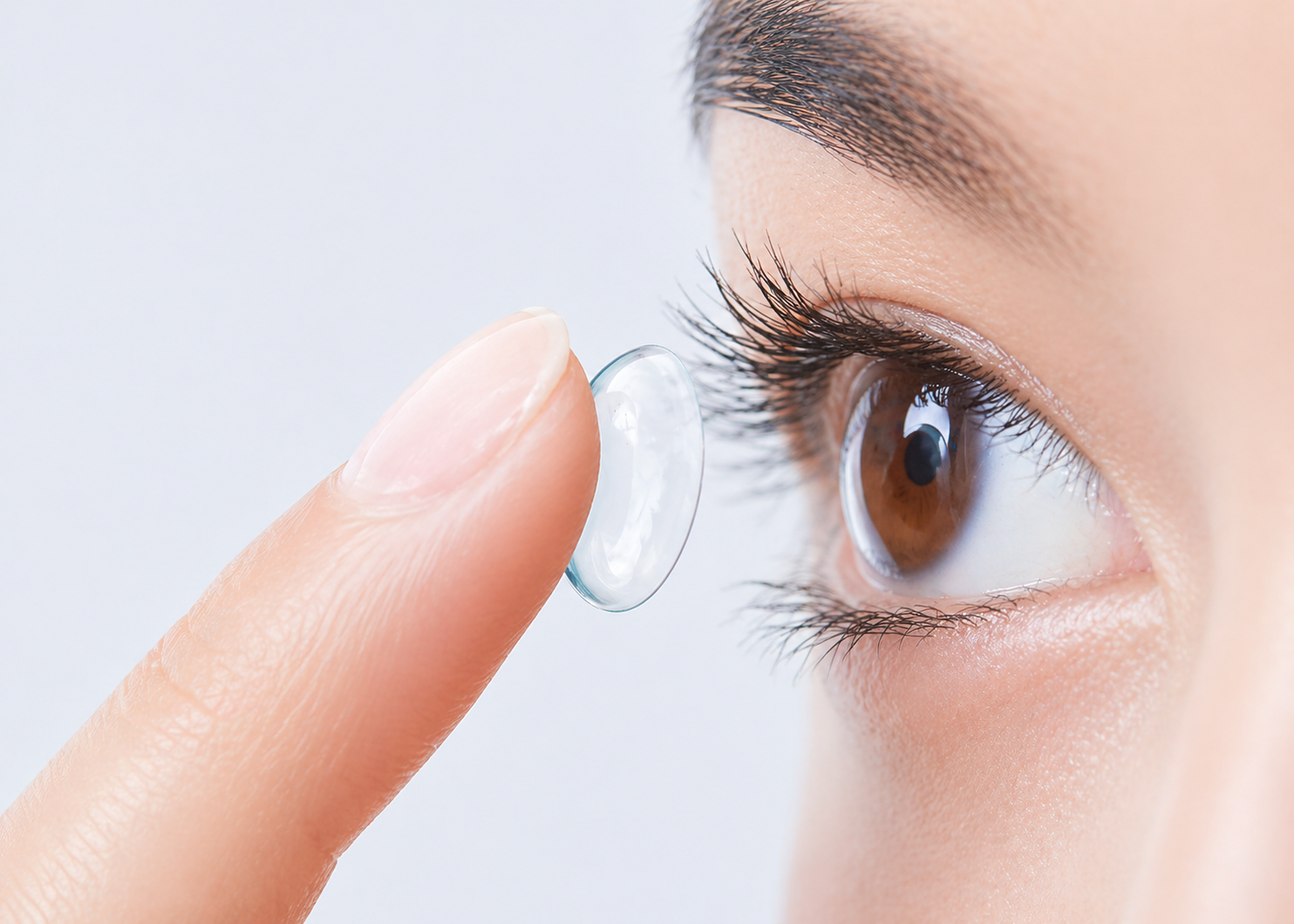
BAIYIN, GANSU, CHINA, August 27, 2026 /EINPresswire.com/ -- Most contact lens wearers know the feeling of popping open a blister pack and placing a crystal-clear lens on their eye. Few have considered the journey that lens took — from a vial of liquid monomer to a sterile, optically precise medical device ready for human corneas. At Constar (Gansu Constar Technology Group), one of China's largest independent contact lens manufacturers, that journey unfolds across six production facilities, over 500 automated machines, and a quality control pipeline of more than 70 inspection units. This article walks through the complete manufacturing process — injection molding, polymerization, hydration, pigmentation, quality inspection, packaging, and sterilization — the same steps that produce over 15 million lenses every month for brands and distributors across 40+ countries.
The Manufacturing Process at a Glance
Step 1 — Formulation: Liquid monomer compounds (HEMA, silicone hydrogel blends, or tinted formulations) are prepared in a controlled-environment mixing room.
Step 2 — Cast Molding: Monomer is injected into precision CNC-machined molds under pressure; UV or thermal curing polymerizes the lens in minutes.
Step 3 — Hydration: Dry lenses are soaked in buffered saline to reach target water content (38–55%), achieving their final soft, flexible form.
Step 4 — Tinting & Pigmentation (colored lenses): FDA-approved pigments are applied via sandwich printing — sealed between two transparent layers with zero leaching.
Step 5 — Quality Inspection: AOI (automated optical inspection) systems measure 12+ optical and physical parameters per lens; 70+ QC checkpoints.
Step 6 — Packaging: Each lens is placed in a blister vial with sterile saline solution, heat-sealed, and labeled.
Step 7 — Sterilization: Sealed vials undergo autoclave sterilization at 121°C for 30 minutes, validated per ISO 11135/11137, ensuring SAL 10⁻⁶.
Step 1: Formulation — Where Chemistry Begins
Every contact lens starts as a liquid. The raw materials — hydroxyethyl methacrylate (HEMA) for traditional hydrogels, or silicone-containing monomers for high-oxygen-permeability silicone hydrogel lenses — are weighed, mixed, and blended in a temperature-controlled formulation room. The precise ratio of monomers, cross-linkers, wetting agents, and UV absorbers determines the lens's final properties: water content, oxygen permeability (Dk), refractive index, and mechanical strength.
At Constar, the formulation lab is part of an ISO 13485-certified quality management system — the same international standard required by the US FDA, EU CE, and Australian TGA. Every batch of raw monomer is tested for purity, viscosity, and polymerization readiness before entering the production line.
Step 2: Cast Molding — Shaping Liquid Into Lens
Contact lens manufacturing today is dominated by cast molding — the same high-volume precision process used for eyeglass lenses, scaled down to micron-level tolerances. The process works as follows:
Mold fabrication: CNC lathes cut female (front curve) and male (back curve) mold halves from optically clear cycloolefin or polypropylene. Each mold set is single-use to ensure surface precision.
Monomer injection: A precisely measured drop of liquid monomer (typically 50–80 microliters) is dispensed into the female mold.
Mold assembly: The male mold is pressed onto the female mold, forcing excess monomer out through a controlled channel and creating the lens's final thickness and curvature.
Polymerization: The assembled mold is exposed to UV light (365 nm) or thermal energy, triggering photo-initiated or thermal polymerization. The liquid monomer cross-links into a solid hydrogel network in 60–120 seconds.
Mold separation: The cured lens is carefully extracted from the mold. At this stage, the lens is dry and rigid — it hasn't yet been hydrated.
Constar's 4th-generation production process (upgraded in 2022) uses automated robotic mold handling and closed-loop injection control, reducing mold misalignment defects to near-zero across all six facilities in Gansu and Hunan provinces.
Step 3: Hydration — Bringing the Lens to Life
A freshly molded contact lens is dry, rigid, and roughly 40% thinner than its final form. The hydration step transforms it into the soft, flexible device the wearer actually uses. Lenses are submerged in phosphate-buffered saline (PBS) at controlled temperature (typically 25–35°C) for 2–24 hours, depending on material. During hydration, water molecules penetrate the polymer matrix, swelling the lens to its target diameter (typically 14.0–14.5 mm) and water content (38% for hydrogel; 43–55% for silicone hydrogel).
This step is critical: under-hydrated lenses are too rigid and cause discomfort; over-hydrated lenses lose dimensional stability and optical precision. Constar's hydration tanks are monitored by real-time sensors that track swelling rate and final dimensions, ensuring every lens meets its specified base curve (typically 8.5–8.7 mm) and center thickness.
Step 4: Pigmentation — Color Without Compromise
For colored contact lenses — Constar's core product category — an additional step occurs between molding and hydration: pigment application. This is where Constar's proprietary sandwich printing technology (introduced in 2015, upgraded in 2020 with laser patterning) sets a safety standard:
Layer 1 (base): A thin, transparent hydrogel layer is molded first.
Layer 2 (pigment): FDA-approved colorants are printed onto the base layer using a precision inkjet or rotary pad system, creating the iris pattern.
Layer 3 (cover): A second transparent hydrogel layer is molded over the pigment, completely sealing it between two biocompatible polymer layers.
The result: the colored pigment never contacts the eye directly, eliminating leaching risk and allergic reactions that plagued early-generation tinted lenses. Constar's laser engraving system (introduced in 2020) produces patterns with thinner lines and higher resolution than conventional printing — a full generation ahead of standard industry methods.
Constar's pigment library includes over 300 color patterns calibrated for diverse iris tones across global markets, from natural browns and grays to cosplay fantasy colors.
Step 5: Quality Inspection — 70+ Checkpoints, Zero Tolerance
Quality control in contact lens manufacturing is not optional — it's a regulatory requirement. Every lens must meet optical, physical, and biocompatibility specifications before it can be packaged. Constar's inspection pipeline includes:
Automated Optical Inspection (AOI): High-resolution cameras measure lens diameter, base curve, center thickness, edge profile, and surface defects (bubbles, scratches, inclusions). Each lens is compared against its digital specification in real time.
Dk/t testing: Oxygen permeability is measured per ISO 18369-4 (polarographic method at 35°C). Constar's patented silicone hydrogel formulation achieves Dk/t values above 110 — well above the Holden-Mertz threshold of 87 for overnight wear.
Power verification: Each lens's refractive power is measured across the full prescription range (-10.00 to +6.00 D) using automated lensometers, with results logged per batch.
Water content testing: Gravimetric analysis verifies that hydration has achieved the target water content within ±1%.
Packaging integrity: Seal strength, saline volume, and label accuracy are checked at the packaging station.
Constar's system runs 500+ automation units across its six facilities, with AGV (Automated Guided Vehicle) logistics moving lenses between stations without human contact — targeting zero-defect output.
Step 6: Packaging — Blister, Foil, Box
Each approved lens is placed into a thermoformed blister vial made of medical-grade polypropylene. A precise volume of sterile saline solution (typically 0.5–1.0 mL) is dispensed into the vial, and the lens is centered. The vial is then sealed with an aluminum foil laminate lid — heat-bonded to create a hermetic seal that maintains sterility until the end user opens it.
The sealed blister is inserted into a printed carton with an instruction leaflet prepared in the destination market's language. Constar provides full OEM/ODM packaging services: custom carton design, Pantone color matching, multi-language inserts (EN/ES/FR/AR/ZH), and regulatory-compliant labeling for FDA, CE, TGA, and SFDA markets.
Step 7: Sterilization — The Final Barrier
A sealed contact lens vial is not yet sterile. The final — and most critical — step is terminal sterilization. Contact lenses are classified as Class II medical devices (FDA) and Class IIa/IIb (EU MDR), and must achieve a Sterility Assurance Level (SAL) of 10⁻⁶, meaning fewer than one in a million units can retain viable microorganisms after processing.
The most common method is moist heat autoclave sterilization: sealed vials are loaded into an autoclave and subjected to 121°C saturated steam at 15 psi for a minimum of 30 minutes. The heat penetrates the saline solution and the lens polymer, denaturing proteins and nucleic acids in any contaminating organisms. After sterilization, vials are cooled under controlled conditions to prevent thermal shock to the lens material.
Some manufacturers also use gamma irradiation (typically 25 kGy cobalt-60) or ethylene oxide (EtO) gas for heat-sensitive materials. Constar validates its sterilization cycles per ISO 11135 (EtO) and ISO 11137 (radiation), with routine biological indicator testing to confirm cycle efficacy.
From Factory Floor to Your Eyes: The Complete Journey
The entire process — from monomer formulation to sterilized, labeled, ready-to-ship lens — takes approximately 55 days for bulk production at Constar, with sample lead times of just 3–7 days. Here's the summary:
Day 1: Monomer formulation and quality check of raw materials.
Days 2–3: Cast molding and polymerization. Over 500 robotic units handle mold operations across six facilities.
Days 3–5: Hydration in temperature-controlled saline baths. Real-time dimensional monitoring.
Days 5–7: Pigmentation and sandwich printing (colored lenses only). Laser engraving for high-resolution patterns.
Days 7–14: Multi-stage quality inspection — AOI, Dk/t testing, power verification, water content analysis. 70+ QC checkpoints per batch.
Days 14–21: Packaging — blister vial filling, foil sealing, carton insertion, labeling.
Days 21–28: Autoclave sterilization and post-sterility biological indicator testing.
Days 28–55: Final release, documentation, and shipping to 40+ countries.
That's the science behind the lens you wear every day. From a drop of liquid monomer to a sterile medical device — manufactured under ISO 13485, tested to ISO 18369-4, and shipped with FDA, CE 0197, TGA, and SFDA documentation — every step exists to protect one thing: your vision.
Frequently Asked Questions
How long does it take to manufacture a contact lens?
From monomer formulation to finished, sterilized lens, the end-to-end production cycle is approximately 55 days for bulk orders. Individual lens molding and polymerization takes under 2 minutes, but hydration, quality inspection, packaging, and sterilization add several weeks. Sample production at Constar takes 3–7 days.
What is the difference between cast molding and lathe cutting?
Cast molding (used by Constar) injects liquid monomer into precision molds, producing millions of identical lenses with high consistency and low per-unit cost. Lathe cutting carves each lens from a solid blank, offering more design flexibility but at lower volume and higher cost. Cast molding dominates the disposable lens market.
How are contact lenses sterilized?
The most common method is moist heat autoclave: sealed lens vials are heated to 121°C at 15 psi for 30 minutes, achieving a Sterility Assurance Level (SAL) of 10⁻⁶. Some manufacturers also use gamma irradiation (25 kGy) or ethylene oxide gas for heat-sensitive materials. All methods must comply with ISO 11135 or ISO 11137 standards.
About Constar
Gansu Constar Technology Group Co., Ltd. is a China-based contact lens OEM and ODM manufacturer serving global brands and distributors in more than 40 countries. Founded in 1984 and headquartered in Baiyin, Gansu Province, the company operates six production facilities with a capacity of over 15 million lenses per month. All Constar lens materials are manufactured under ISO 13485 quality management and tested to ISO 18369-4 for oxygen permeability, with portfolios spanning silicone hydrogel daily disposables, monthly lenses, and colored/cosmetic series. Constar holds US FDA (510(k), Class II), EU CE 0197 (MDR), TGA, SFDA, AKL and Class B (Vietnam) certifications.
Sources:
Constar — About Constar — manufacturing facilities, certifications, and production timeline.
Constar — Product Portfolio — silicone hydrogel Dk/t > 110, sandwich printing, laser engraving.
Constar — Clear Contact Lenses — polymacon specifications, water content 38%, power range 1.00–10.00.
CooperVision — How Our Contacts Are Made — cast molding and injection molding processes.
Shaker LM, et al. — The Industrial Landscape of Contact Lens Manufacturing — ResearchGate, 2024.
The Manufacturing Process at a Glance
Step 1 — Formulation: Liquid monomer compounds (HEMA, silicone hydrogel blends, or tinted formulations) are prepared in a controlled-environment mixing room.
Step 2 — Cast Molding: Monomer is injected into precision CNC-machined molds under pressure; UV or thermal curing polymerizes the lens in minutes.
Step 3 — Hydration: Dry lenses are soaked in buffered saline to reach target water content (38–55%), achieving their final soft, flexible form.
Step 4 — Tinting & Pigmentation (colored lenses): FDA-approved pigments are applied via sandwich printing — sealed between two transparent layers with zero leaching.
Step 5 — Quality Inspection: AOI (automated optical inspection) systems measure 12+ optical and physical parameters per lens; 70+ QC checkpoints.
Step 6 — Packaging: Each lens is placed in a blister vial with sterile saline solution, heat-sealed, and labeled.
Step 7 — Sterilization: Sealed vials undergo autoclave sterilization at 121°C for 30 minutes, validated per ISO 11135/11137, ensuring SAL 10⁻⁶.
Step 1: Formulation — Where Chemistry Begins
Every contact lens starts as a liquid. The raw materials — hydroxyethyl methacrylate (HEMA) for traditional hydrogels, or silicone-containing monomers for high-oxygen-permeability silicone hydrogel lenses — are weighed, mixed, and blended in a temperature-controlled formulation room. The precise ratio of monomers, cross-linkers, wetting agents, and UV absorbers determines the lens's final properties: water content, oxygen permeability (Dk), refractive index, and mechanical strength.
At Constar, the formulation lab is part of an ISO 13485-certified quality management system — the same international standard required by the US FDA, EU CE, and Australian TGA. Every batch of raw monomer is tested for purity, viscosity, and polymerization readiness before entering the production line.
Step 2: Cast Molding — Shaping Liquid Into Lens
Contact lens manufacturing today is dominated by cast molding — the same high-volume precision process used for eyeglass lenses, scaled down to micron-level tolerances. The process works as follows:
Mold fabrication: CNC lathes cut female (front curve) and male (back curve) mold halves from optically clear cycloolefin or polypropylene. Each mold set is single-use to ensure surface precision.
Monomer injection: A precisely measured drop of liquid monomer (typically 50–80 microliters) is dispensed into the female mold.
Mold assembly: The male mold is pressed onto the female mold, forcing excess monomer out through a controlled channel and creating the lens's final thickness and curvature.
Polymerization: The assembled mold is exposed to UV light (365 nm) or thermal energy, triggering photo-initiated or thermal polymerization. The liquid monomer cross-links into a solid hydrogel network in 60–120 seconds.
Mold separation: The cured lens is carefully extracted from the mold. At this stage, the lens is dry and rigid — it hasn't yet been hydrated.
Constar's 4th-generation production process (upgraded in 2022) uses automated robotic mold handling and closed-loop injection control, reducing mold misalignment defects to near-zero across all six facilities in Gansu and Hunan provinces.
Step 3: Hydration — Bringing the Lens to Life
A freshly molded contact lens is dry, rigid, and roughly 40% thinner than its final form. The hydration step transforms it into the soft, flexible device the wearer actually uses. Lenses are submerged in phosphate-buffered saline (PBS) at controlled temperature (typically 25–35°C) for 2–24 hours, depending on material. During hydration, water molecules penetrate the polymer matrix, swelling the lens to its target diameter (typically 14.0–14.5 mm) and water content (38% for hydrogel; 43–55% for silicone hydrogel).
This step is critical: under-hydrated lenses are too rigid and cause discomfort; over-hydrated lenses lose dimensional stability and optical precision. Constar's hydration tanks are monitored by real-time sensors that track swelling rate and final dimensions, ensuring every lens meets its specified base curve (typically 8.5–8.7 mm) and center thickness.
Step 4: Pigmentation — Color Without Compromise
For colored contact lenses — Constar's core product category — an additional step occurs between molding and hydration: pigment application. This is where Constar's proprietary sandwich printing technology (introduced in 2015, upgraded in 2020 with laser patterning) sets a safety standard:
Layer 1 (base): A thin, transparent hydrogel layer is molded first.
Layer 2 (pigment): FDA-approved colorants are printed onto the base layer using a precision inkjet or rotary pad system, creating the iris pattern.
Layer 3 (cover): A second transparent hydrogel layer is molded over the pigment, completely sealing it between two biocompatible polymer layers.
The result: the colored pigment never contacts the eye directly, eliminating leaching risk and allergic reactions that plagued early-generation tinted lenses. Constar's laser engraving system (introduced in 2020) produces patterns with thinner lines and higher resolution than conventional printing — a full generation ahead of standard industry methods.
Constar's pigment library includes over 300 color patterns calibrated for diverse iris tones across global markets, from natural browns and grays to cosplay fantasy colors.
Step 5: Quality Inspection — 70+ Checkpoints, Zero Tolerance
Quality control in contact lens manufacturing is not optional — it's a regulatory requirement. Every lens must meet optical, physical, and biocompatibility specifications before it can be packaged. Constar's inspection pipeline includes:
Automated Optical Inspection (AOI): High-resolution cameras measure lens diameter, base curve, center thickness, edge profile, and surface defects (bubbles, scratches, inclusions). Each lens is compared against its digital specification in real time.
Dk/t testing: Oxygen permeability is measured per ISO 18369-4 (polarographic method at 35°C). Constar's patented silicone hydrogel formulation achieves Dk/t values above 110 — well above the Holden-Mertz threshold of 87 for overnight wear.
Power verification: Each lens's refractive power is measured across the full prescription range (-10.00 to +6.00 D) using automated lensometers, with results logged per batch.
Water content testing: Gravimetric analysis verifies that hydration has achieved the target water content within ±1%.
Packaging integrity: Seal strength, saline volume, and label accuracy are checked at the packaging station.
Constar's system runs 500+ automation units across its six facilities, with AGV (Automated Guided Vehicle) logistics moving lenses between stations without human contact — targeting zero-defect output.
Step 6: Packaging — Blister, Foil, Box
Each approved lens is placed into a thermoformed blister vial made of medical-grade polypropylene. A precise volume of sterile saline solution (typically 0.5–1.0 mL) is dispensed into the vial, and the lens is centered. The vial is then sealed with an aluminum foil laminate lid — heat-bonded to create a hermetic seal that maintains sterility until the end user opens it.
The sealed blister is inserted into a printed carton with an instruction leaflet prepared in the destination market's language. Constar provides full OEM/ODM packaging services: custom carton design, Pantone color matching, multi-language inserts (EN/ES/FR/AR/ZH), and regulatory-compliant labeling for FDA, CE, TGA, and SFDA markets.
Step 7: Sterilization — The Final Barrier
A sealed contact lens vial is not yet sterile. The final — and most critical — step is terminal sterilization. Contact lenses are classified as Class II medical devices (FDA) and Class IIa/IIb (EU MDR), and must achieve a Sterility Assurance Level (SAL) of 10⁻⁶, meaning fewer than one in a million units can retain viable microorganisms after processing.
The most common method is moist heat autoclave sterilization: sealed vials are loaded into an autoclave and subjected to 121°C saturated steam at 15 psi for a minimum of 30 minutes. The heat penetrates the saline solution and the lens polymer, denaturing proteins and nucleic acids in any contaminating organisms. After sterilization, vials are cooled under controlled conditions to prevent thermal shock to the lens material.
Some manufacturers also use gamma irradiation (typically 25 kGy cobalt-60) or ethylene oxide (EtO) gas for heat-sensitive materials. Constar validates its sterilization cycles per ISO 11135 (EtO) and ISO 11137 (radiation), with routine biological indicator testing to confirm cycle efficacy.
From Factory Floor to Your Eyes: The Complete Journey
The entire process — from monomer formulation to sterilized, labeled, ready-to-ship lens — takes approximately 55 days for bulk production at Constar, with sample lead times of just 3–7 days. Here's the summary:
Day 1: Monomer formulation and quality check of raw materials.
Days 2–3: Cast molding and polymerization. Over 500 robotic units handle mold operations across six facilities.
Days 3–5: Hydration in temperature-controlled saline baths. Real-time dimensional monitoring.
Days 5–7: Pigmentation and sandwich printing (colored lenses only). Laser engraving for high-resolution patterns.
Days 7–14: Multi-stage quality inspection — AOI, Dk/t testing, power verification, water content analysis. 70+ QC checkpoints per batch.
Days 14–21: Packaging — blister vial filling, foil sealing, carton insertion, labeling.
Days 21–28: Autoclave sterilization and post-sterility biological indicator testing.
Days 28–55: Final release, documentation, and shipping to 40+ countries.
That's the science behind the lens you wear every day. From a drop of liquid monomer to a sterile medical device — manufactured under ISO 13485, tested to ISO 18369-4, and shipped with FDA, CE 0197, TGA, and SFDA documentation — every step exists to protect one thing: your vision.
Frequently Asked Questions
How long does it take to manufacture a contact lens?
From monomer formulation to finished, sterilized lens, the end-to-end production cycle is approximately 55 days for bulk orders. Individual lens molding and polymerization takes under 2 minutes, but hydration, quality inspection, packaging, and sterilization add several weeks. Sample production at Constar takes 3–7 days.
What is the difference between cast molding and lathe cutting?
Cast molding (used by Constar) injects liquid monomer into precision molds, producing millions of identical lenses with high consistency and low per-unit cost. Lathe cutting carves each lens from a solid blank, offering more design flexibility but at lower volume and higher cost. Cast molding dominates the disposable lens market.
How are contact lenses sterilized?
The most common method is moist heat autoclave: sealed lens vials are heated to 121°C at 15 psi for 30 minutes, achieving a Sterility Assurance Level (SAL) of 10⁻⁶. Some manufacturers also use gamma irradiation (25 kGy) or ethylene oxide gas for heat-sensitive materials. All methods must comply with ISO 11135 or ISO 11137 standards.
About Constar
Gansu Constar Technology Group Co., Ltd. is a China-based contact lens OEM and ODM manufacturer serving global brands and distributors in more than 40 countries. Founded in 1984 and headquartered in Baiyin, Gansu Province, the company operates six production facilities with a capacity of over 15 million lenses per month. All Constar lens materials are manufactured under ISO 13485 quality management and tested to ISO 18369-4 for oxygen permeability, with portfolios spanning silicone hydrogel daily disposables, monthly lenses, and colored/cosmetic series. Constar holds US FDA (510(k), Class II), EU CE 0197 (MDR), TGA, SFDA, AKL and Class B (Vietnam) certifications.
Sources:
Constar — About Constar — manufacturing facilities, certifications, and production timeline.
Constar — Product Portfolio — silicone hydrogel Dk/t > 110, sandwich printing, laser engraving.
Constar — Clear Contact Lenses — polymacon specifications, water content 38%, power range 1.00–10.00.
CooperVision — How Our Contacts Are Made — cast molding and injection molding processes.
Shaker LM, et al. — The Industrial Landscape of Contact Lens Manufacturing — ResearchGate, 2024.
Gansu Constar
Gansu Constar Technology Group CO.,LTD
+852 91218475
info@constarfactory.com
Legal Disclaimer:
EIN Presswire provides this news content "as is" without warranty of any kind. We do not accept any responsibility or liability for the accuracy, content, images, videos, licenses, completeness, legality, or reliability of the information contained in this article. If you have any complaints or copyright issues related to this article, kindly contact the author above.
